CALLED TO BECOME SAINTS AND PATRIOTIC CITIZENS
by ARCH BISHOP · November 1, 2026
CALLED TO BECOME SAINTS AND PATRIOTIC CITIZENS OF NIGERIA
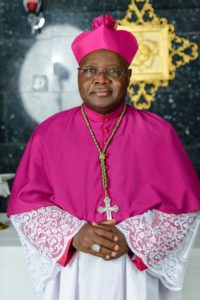
31ST SUNDAY IN ORDINARY TIME, YEAR A/SOLEMNITY OF ALL SAINTS, 1ST NOVEMBER, 2026, OUR LADY QUEEN OF NIGERIA PRO-CATHEDRAL, ABUJA. HOMILY BY MOST REV. IGNATIUS A. KAIGAMA, ARCHBISHOP OF ABUJA
READINGS: REVELATION 7:2-4, 9-14; 1 JOHN 3:1-3; MATTHEW 5:1-12A
Dear brothers and sisters in Christ
Today, the Church celebrates the Solemnity of All Saints, a feast that reminds us of the fundamental truth: nobody is born a saint, but everybody is called to become one. Most of us have chosen the names of saints at Baptism and Confirmation, while others bear meaningful indigenous names. Whatever names we bear, today, we are invited to look beyond our names and ask ourselves whether our lives reflect the holiness to which God calls us.
Ordinarily, the Solemnity of All Saints falls on a weekday and sometimes does not receive the attention it deserves. This year, however, it falls on a Sunday, when we gather in greater numbers to worship God. It is therefore a wonderful opportunity for more people to hear and embrace the message that holiness is not reserved for a privileged few. It is a universal vocation.
Indeed, All Saints’ Day is observed as a public holiday in several African countries, including Senegal, Burkina Faso, Chad, Côte dIvoire, Central African Republic, Mauritius and Togo. This reminds us that the Christian heritage of holiness has a place in the wider African story and in our common human search for goodness, peace and justice.
In our first reading, from the Book of Revelation, St. John sees a great multitude which nobody could number, drawn from every nation, tribe, people and language. They stand before the throne of God and before the Lamb, clothed in white robes and holding palm branches in their hands.
When John asks who they are, he is told: “These are they who have come out of the great tribulation; they have washed their robes and made them white in the blood of the Lamb.” What a beautiful vision! Heaven is not an excusive gathering of people from one country, tribe, language, social class or profession. It is a multitude from every nation and people united by their faithfulness to God. Their white garments represent lives purified by the grace of Christ, while their palm branches symbolize victory over sin, suffering and death.
The saints we honour today once walked the same earth on which we live. Some were wealthy, others were poor; some were highly educated, others had little formal education. Some were priests and religious, while others were married men and women who sanctified themselves through family life. some served God in public and influential positions; others lived quietly, almost unnoticed by the world.
What united them was their perseverance in faith, their love of God and their generous service to others, especially the poor, the sick, strangers, orphans and the vulnerable.
They were not seasonal Christians. They did not serve God only when things were going well. They remained faithful in times of abundance and deprivation, joy and sorrow, comfort and persecution. They understood that holiness is not measured by how much we possess, how famous we become or how many people applaud us, but by how faithfully we love and serve God and our neighbour.
This celebration, therefore, raises a very personal question: What will you be remembered for when you depart this world? What footprints of goodness, compassion, justice, and love will you leave behind?
The saints were not born perfect. They experienced disappointments, ambitions, temptations, failures, suffering and uncertainty, just as we do.
They were human beings who depended on God’s mercy. What distinguished them was their willingness to rise after falling, repent when they sinned, forgive when they were offended, persevere when life became difficult and allow God’s grace to transform them.
The second reading reminds us of our extraordinary dignity: “See what love the Father has bestowed on us that we may be called children of God. Yet so we are!” (1 John 3:1). We are already God’s children, but we are called to become more fully what we are. Holiness is the journey of allowing our lives to reflect our identity as God’s children. We do not become saints through our strength alone, but through God’s grace and our cooperation with it.
How, then, do we become saints? Jesus gives us the answer in today’s Gospel through the Beatitudes. Blessed are the poor in spirit, the meek, those who mourn, those who hunger and thirst for righteousness, the merciful, the pure of heart, the peacemakers and those persecuted for the sake of righteousness.
The Beatitudes are not merely beautiful religious sayings to be displayed on our walls. They are a practical programme for Christian living. They challenge the values of a world that often celebrates greed, pride, dishonesty, revenge, violence and the abuse of power. Jesus teaches us that true greatness is found in humility, mercy, purity of heart, justice and peace. It is not enough to display statues and pictures of St. Rita, St. Jude, St. Anthony and other saints in our homes, offices and churches, or to invoke their intercession in prayer. We must also imitate their virtues. The world does not need Christians who merely speak about holiness; it needs Christians whose lives make holiness visible, credible and attractive.
We do not have to perform extraordinary miracles to become saints. We can attain holiness by doing ordinary things extraordinarily well: loving our families, being faithful to our spouses, raising our children responsibly, treating workers fairly, refusing to cheat, forgiving those who offend us, helping the needy and performing our professional duties with integrity. A teacher, doctor, nurse, police officer, customs officer, immigration officer, judge, farmer, trader, cleaner, journalist, politician or businessperson can become a saint. Every honest profession and every sincere act of service can become a path to holiness.
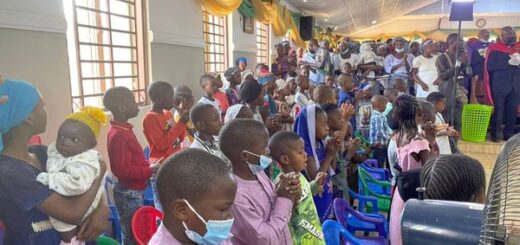
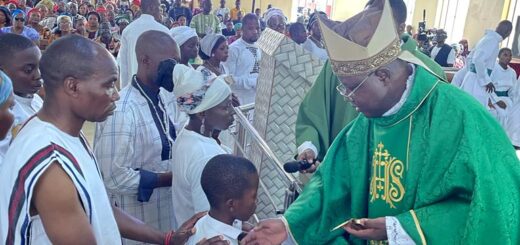
I particularly challenge the over 200 candidates who will receive the Sacrament of Confirmation today. Do not regard Confirmation merely as a ceremony, a photograph opportunity or another milestone n your religious education. It is a strengthening by the Holy Spirit for Christian witness. You are being equipped to live courageously as disciples of Christ. Let the gifts of the Holy Spirit make you young men and women of integrity, prayer, discipline, compassion and responsibility. Do not allow peer pressure, corruption, drug abuse, violence or the pursuit of quick wealth to rob you of your Christian identity. You too can become saints!
We must also recognize that holiness has a social and national dimension. A person cannot sincerely claim to love God while deliberately destroying the peace, dignity and wellbeing of others. A Christian who cheats, takes bribes, manipulates others, promotes hatred or exploits the vulnerable contradicts the Gospel, regardless of how frequently that person attends Church.
The Holy Father, Pope Leo XIV, has recently reminded the international community of the importance of being agents of peace rather than war. His message resonates deeply with today’s Gospel: “Blessed are the peacemakers, for they shall be called children of God.” No violence becomes holy simply because it is committed in the name of religion. Peace, justice, reconciliation and respect for human dignity must characterize our Christian witness.
I recall my visit to Assisi, where I prayed at the tomb of St. Francis of Assisi, St. Clare and St. Carlo Acutis. The witness of these saints speaks across generations. St. Francis reminds us of simplicity, fraternity and care for creation; St. Clare teaches us radical trust in God; and the young St. Carlo Acutis demonstrates that even in our digital age, young people can use their talents and modern technology to lead others towards Christ.
We also remember St. Charles Lwanga and his companions, the Ugandan martyrs, who chose fidelity to Christ even at the cost of their lives. We remember Blessed Michael Iwene Tansi, our own Nigerian example of prayer, discipline and pastoral dedication. We can also draw inspiration from the young Congolese Christian, Floribert Bwana Chui, who courageously resisted corruption and refused to compromise the safety of others for personal gain. His witness reminds us that integrity in public service can itself become a powerful testimony to the Gospel.
Dear brothers and sisters, this is particularly relevant to Nigeria today. As we look towards the 2027 general elections, the Catholic Bishops of Nigeria have called us to sustained prayer for peaceful, transparent, credible and properly conducted elections that genuinely reflect the will of the people. The national prayer programme carries the theme: “Let Justice and Peace Flow” (Amos
5:24).
Let us take this appeal seriously. Prayer must go together with responsible action. We must demonstrate patriotism by participating peacefully in the electoral process, respecting the rights of others, rejecting electoral violence and refusing to sell our conscience for money or temporary political advantage. Those seeking public office must put the common good above personal ambition, while those entrusted with conducting elections must discharge their responsibilities with impartiality, transparency and integrity.
Let us pray for Nigeria in which justice is not negotiable, public resources are used for the common good, the vulnerable are protected and every citizen can live with dignity. May the forthcoming elections surprise us positively: may political leaders respect due process, citizens demonstrate genuine patriotism, electoral officials uphold their responsibilities and all of us reject every attempt to undermine peace and national unity.
This is what it means to be both a saint and a patriotic citizen. We cannot build a holy society with dishonest citizens, nor can we secure lasting peace through hatred, selfishness and injustice. The Beatitudes must become visible in our homes, communities, institutions and national life.
Dear brothers and sisters, the Solemnity of All Saints is not simply a celebration of those who have reached heaven; it is also a reminder of our own destiny and responsibility. The saints have shown us that holiness is possible. They have gone before us, but they have not left us alone. Through the communion of the saints, they remain united with us in Christ and encourage us on our earthly pilgrimage.
May we therefore have the courage to live the Beatitudes, serve as Christ served, love as Christ loved, forgive as Christ forgave and pray as Christ prayed. May we become instruments of peace in our families, our Church and our beloved Nigeria.
Through the intercession of the Blessed Virgin Mary, Queen of All Saints and Queen of Nigeria, may God grant us the grace to persevere in holiness, so that one day, we too may stand before His throne, clothed in white, joining the countless multitude in eternal praise and worship.
May the saints inspire us, may the Holy Spirit strengthen us, and may Christ lead us to eternal life. Amen.